
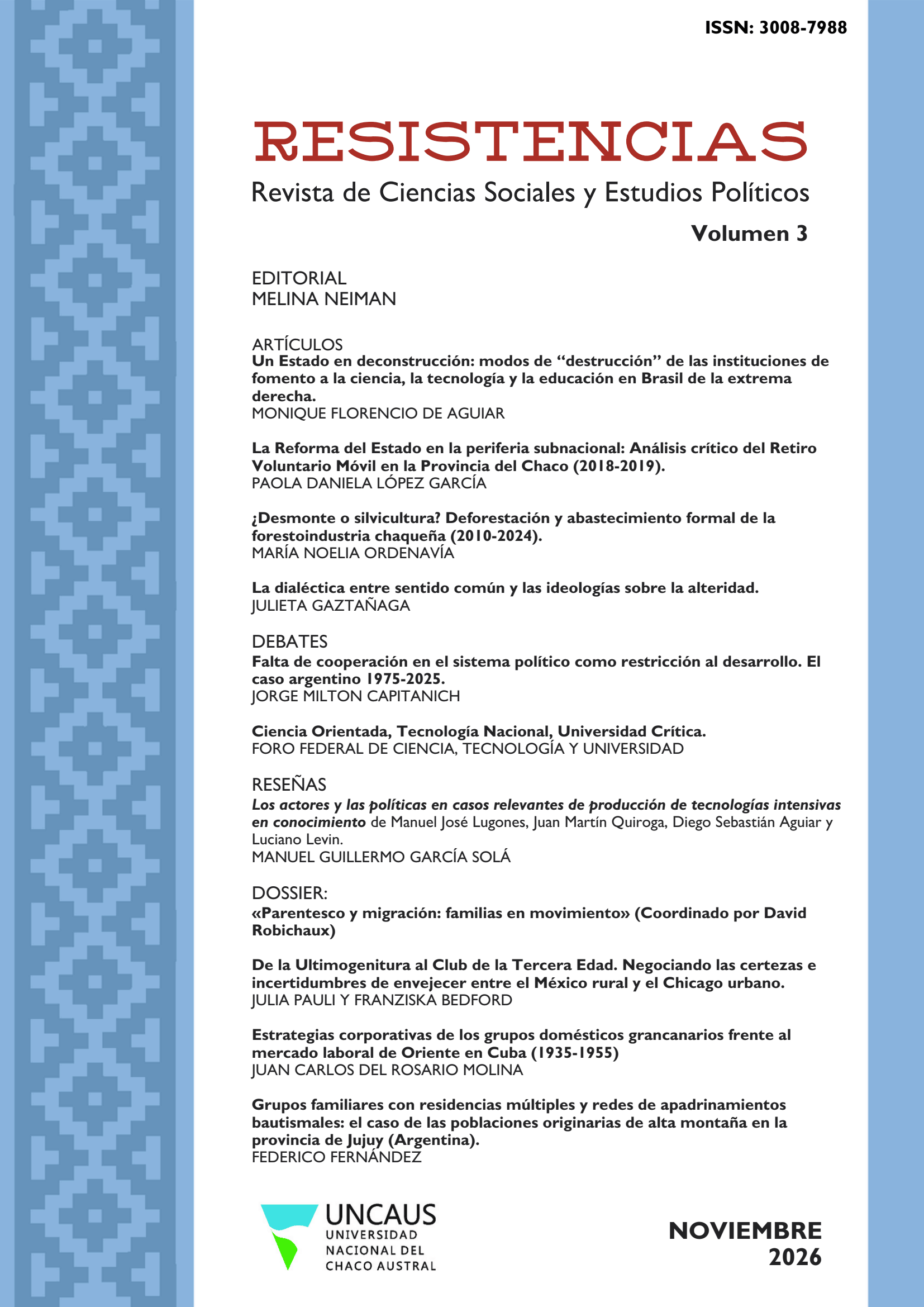
From Ultimogeniture to Senior Club. Negotiating Certainties and Uncertainties of Growing Older between Rural Mexico and Urban Chicago
Keywords:
ageing, transnational families, Mexico-United States migration, kinship, ethnographyAbstract
This article describes and analyses some of the ambivalences of growing older in transnational families. Drawing on long-term ethnographic fieldwork in Pueblo Nuevo, a rural community in central Mexico, and among Mexican migrants in Chicago, United States, it compares the ideals and the lived realities of old age on both sides of the border. It argues that, despite strong normative discourses idealizing an old age surrounded by the extended family, the lives of most of the elderly people studied are marked by the absence of close kin. The analysis shows the strategies through which these absences are filled: in Pueblo Nuevo, caring for migrants’ houses and for grandchildren; in Chicago, senior clubs and parish activities. Migration also transforms economic security in old age, which comes to depend on remittances in Mexico and on Social Security in the United States. The migratory experience thus creates new uncertainties and, at the same time, new certainties, while the ideal of “la familia” persists as a romantic and distant image.
Downloads
Published
How to Cite
Issue
Section
License
Copyright (c) 2026 Revista de Ciencias Sociales y Estudios Políticos

This work is licensed under a Creative Commons Attribution-NonCommercial-ShareAlike 4.0 International License.


