
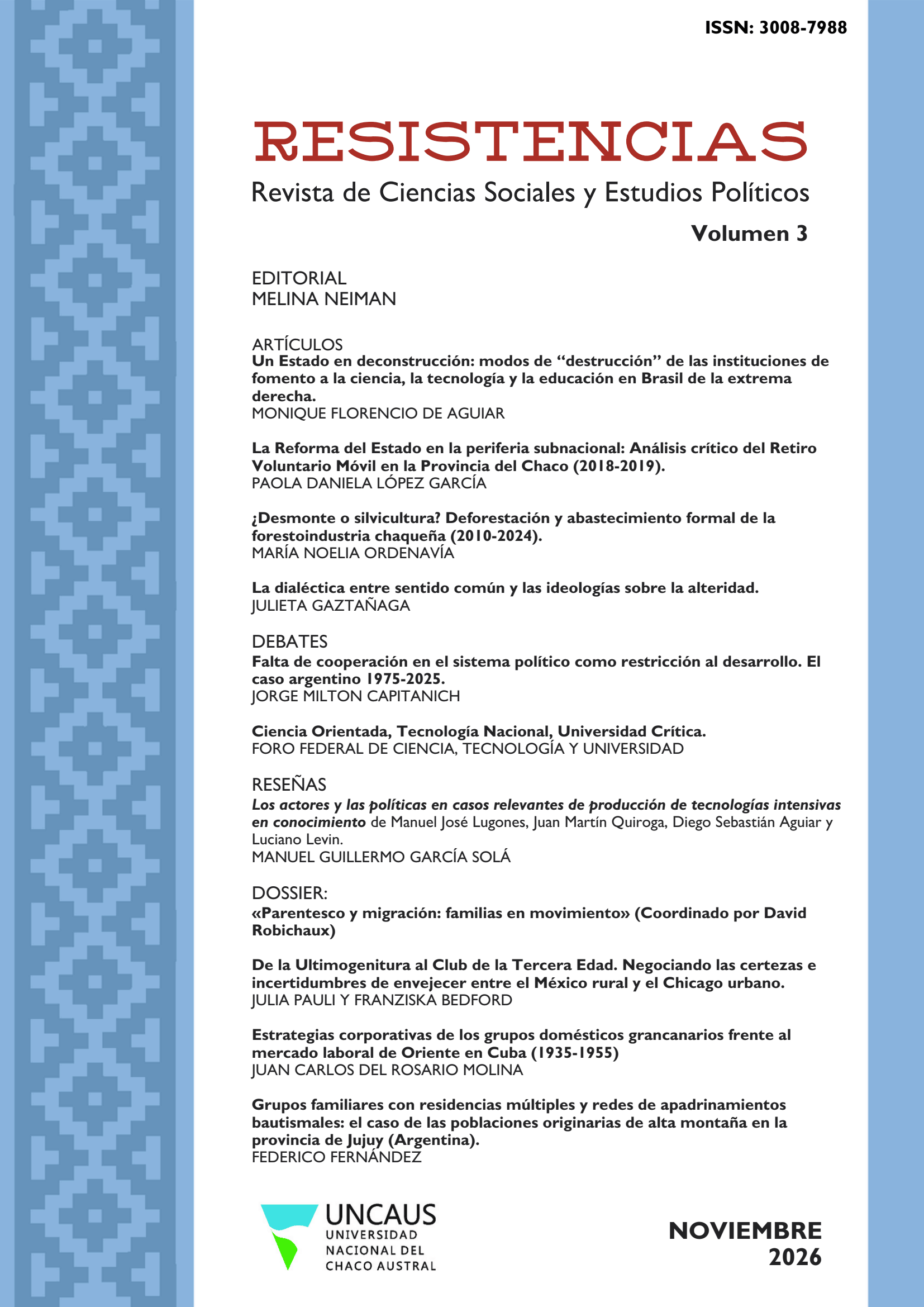
Corporate strategies of Gran Canarian domestic groups in the labor market of Eastern Cuba (1913-1955)
Keywords:
domestic groups, social reproduction, ethnography, identityAbstract
This article examines the strategies employed by domestic groups from Gran Canaria that settled in southeastern Cuba during the first half of the 20th century. These groups combined wage labor with other income-generating activities, which facilitated social reproduction and sociocultural adaptation within a multiethnic context characterized by competition for resources. The text highlights the importance of multisited ethnography for understanding migrants as social agents who maintain and weave connections at local, national, and transnational levels. This perspective allows for the identification of key aspects regarding the social construction of gender, social networks, and processes of cultural identity or ethnicity. Microanalytical reflections (grounded in an ethnohistorical and systemic approach and based on ethnographic data) reveal new sociocultural nuances concerning the roles of men and women during the adaptation process; this is a domain particularly prone to varied interpretations and perceptions, given its central role in social relations.
Downloads
Published
How to Cite
Issue
Section
License
Copyright (c) 2026 Revista de Ciencias Sociales y Estudios Políticos

This work is licensed under a Creative Commons Attribution-NonCommercial-ShareAlike 4.0 International License.


