
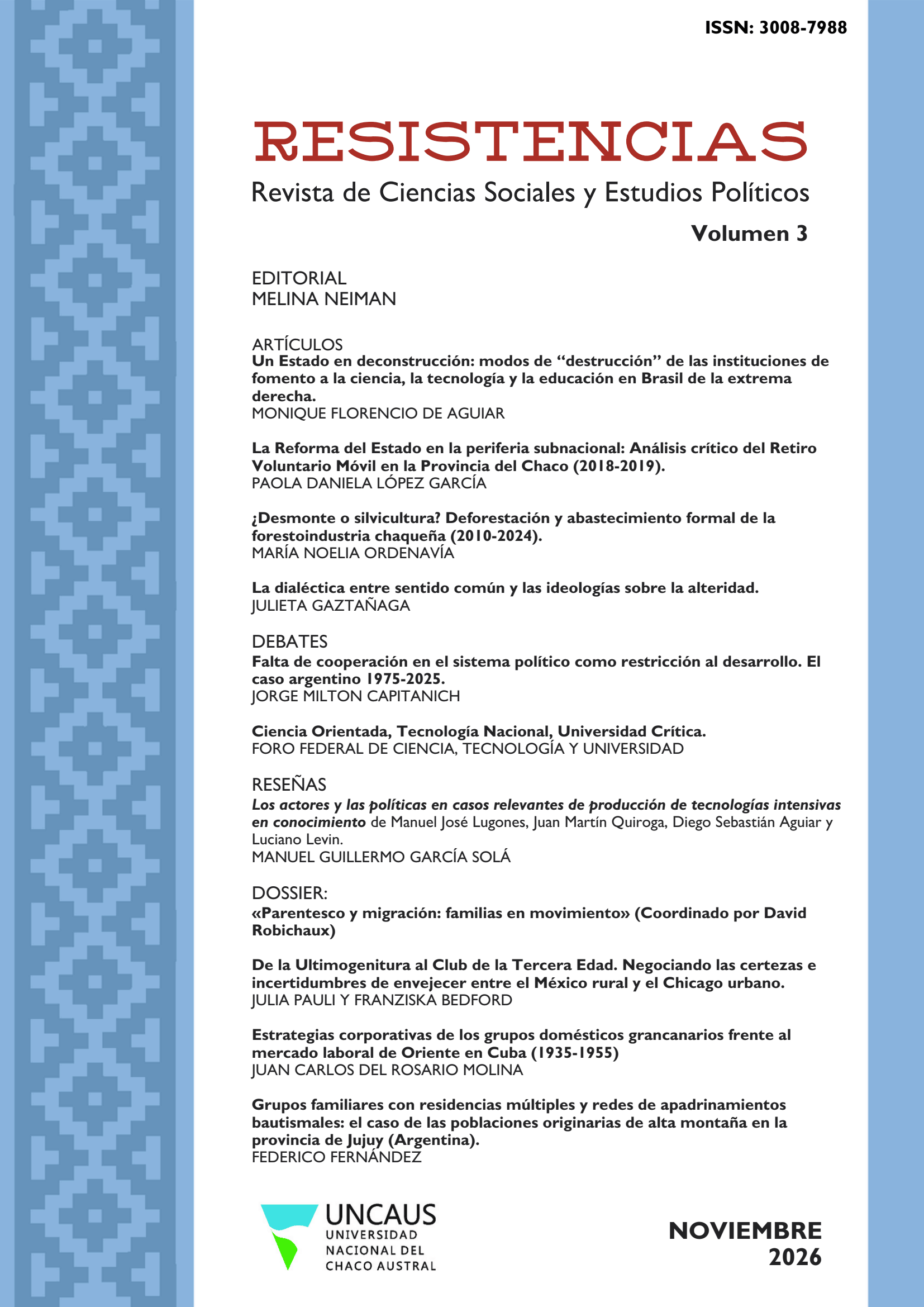
The dialectic between common sense and ideologies of otherness
Keywords:
common sense, stereotype, ideologies of otherness, geneticization, situated knowledgeAbstract
By focusing on the concept of stereotype and the effects of common sense, this article seeks to address the ideologies of otherness from the perspective of the relationship between common sense and analytical categories. It departs from an anthropological exploration of beauty, illustrated by sociocultural contrasts regarding teeth and hair. It then systematizes the distinction between common sense and scientific sense, applying such differentiation across two key areas: the persistence of stereotypes as a means of naturalizing and objectifying otherness, and the current scope of racism, ethnocentrism, nationalism, and xenophobia. Drawing from this conceptual framework, the article then examines the historical biologization of human differences and its contemporary reformulation as the geneticization of identity through various case studies. The conclusions propose that common sense is not merely an error for science to correct, but rather a systematic and powerful matrix of meaning that demands ongoing inquiry in the treatment of otherness and the production of situated knowledge.
Downloads
Published
How to Cite
Issue
Section
License
Copyright (c) 2026 Revista de Ciencias Sociales y Estudios Políticos

This work is licensed under a Creative Commons Attribution-NonCommercial-ShareAlike 4.0 International License.


